花样男子
抚顺:筑梦奋进 书写冰雪体育新辉煌_我的网站

一 | 为巩固和扩大“带动三亿人参与冰雪运动”成果,近年来,我市牢固树立冰天雪地也是金山银山的理念,加快构建现代冰雪产业体系,以冰雪运动为引领,带动冰雪文化、冰雪装备、冰雪旅游全产业链发展,推动冰雪经济高质量发展。
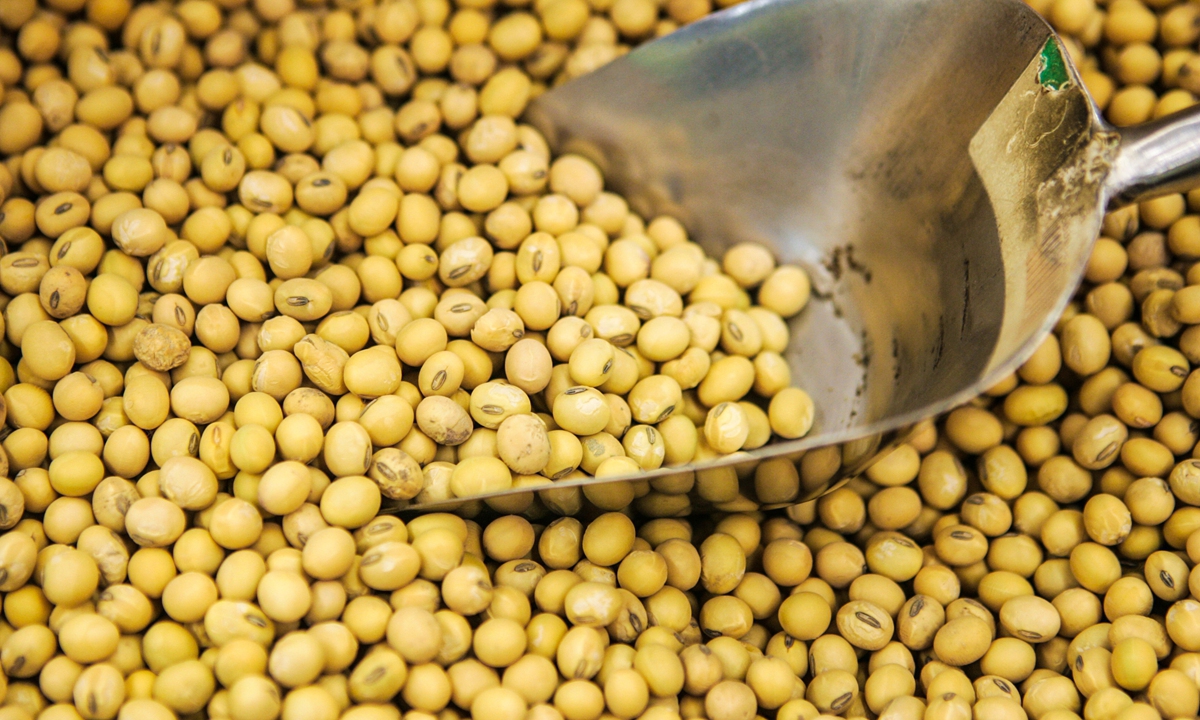
Soybean Photo: VCG
China continues to be the leading destination for Brazilian soybeans, and the Brazilian soybean industry wants to further deepen this relationship, expecting historically high volumes in the coming months, the Brazilian Association of Soybean Growers (Aprosoja Brasil) told the Global Times on Friday.
Brazilian soybean exports to China have remained very strong. China imported 12.08 million tons of soybeans from Brazil in June, up 13.7 percent year-on-year, while imports from the US fell 20.9 percent year-on-year to 1.27 million tons, according to data from the General Administration of Customs.
China imported 34.75 million tons of soybeans from Brazil during the period, up 9.1 percent year-on-year, according to Aprosoja Brasil. "Based on arrivals and customs clearance in China, there was clear growth," the association said.
According to the official data platform Brazilian Comex Stat, which records shipments at origin, 48.32 million metric tons were destined for China from January through June, largely unchanged from 48.41 million metric tons during the same period in 2025.
The difference between the two datasets mainly reflects timing and methodological differences between the recording of departures, cargoes in transit, arrivals and customs clearance.
Aprosoja Brasil said that the broader economic conclusion is the same: "Trade flows remained historically strong, China continued to be the leading destination for Brazilian soybeans, and Brazil's total soybean exports reached a first-half record of 69.57 million metric tons."
For farmers, strong export volumes help support the marketing of the crop, although record exports do not automatically mean record farm margins, said the Brazilian industry association.
China is the world's largest soybean importer. Imported soybeans are mainly used for oil production and animal feed. In terms of trading partners, China mainly imports soybean-related products from Brazil, the US, Argentina, Uruguay and Canada.
Brazil ranks among the world's leading soybean producers and exporters, with China being its largest export market for soybeans, according to the Xinhua News Agency.
Commenting on the significance of the Chinese market, Aprosoja Brasil said "China is absolutely strategic to Brazil's soybean industry," citing data showing that in 2025, China purchased 85.4 million metric tons, representing approximately 79 percent of all Brazilian soybean exports.
The two countries also have a highly complementary trade relationship. For Brazilian farmers, Chinese demand provides scale, market liquidity and greater capacity for long-term planning, said the Brazilian soybean industry association. For China, Brazil offers large, competitive and reliable supplies, as well as a crop calendar that complements production in other supplying countries.
Previously, policy shifts, such as US unilateral tariff measures, have caused disruption for US soybean farmers and other agricultural producers, Lü Xiang, research fellow at the Chinese Academy of Social Sciences, told the Global Times.
At the same time, China has been diversifying imports, including from Brazil and Argentina, to reduce risks from trade uncertainty, according to Lü.
Aprosoja Brasil noted that this partnership should not be seen merely as a temporary consequence of trade disputes involving third countries. Instead, it is a structural and mutually beneficial relationship, based on the complementarity between Brazil's production capacity and China's large demand for food, animal feed and protein, the industry group said.
Looking ahead to the soybean trade for the rest of the year, Aprosoja Brasil said that they are positive, while having a prudent mindset. Brazil has completed the harvest of a record soybean crop of approximately 180.6 million metric tons, and Brazilian soybean exports are expected to reach 116.3 million metric tons in 2026, which would also be a record, the association said.
"Brazil therefore has sufficient supply to continue serving the Chinese market strongly in the coming months... We expect historically high volumes, although not necessarily growth every single month, because soybean trade is seasonal and Northern Hemisphere supplies become more prominent during the second half of the year," it said.
。
近年来,我市深入实施冰雪运动战略,丰富一系列冰雪品牌活动内容,深入发掘群众喜闻乐见的冰雪项目,因地制宜推进群众性冰雪赛事活动建设,广泛开展群众性冰雪运动,引导群众参与适宜的冰雪运动。
抚顺市依托冰雪资源优势,积极与冰雪运动协会、俱乐部、企业等合作,持续开展冰雪运动知识宣讲进校园、青少年冬季户外体育活动和体育竞赛,大力营造校园冰雪体育文化氛围,夯实冰雪运动后备人才基础,推动冰雪项目进校园,让“冷运动”在抚顺热起来。

二 |
同时,为了推动群众性冰雪运动蓬勃发展,壮大冰雪运动人才队伍,抚顺市多次举办群众冰雪相关赛事和体验活动,激发市民参与热情,营造良好氛围,提升运动技能。
下一步,我市将进一步提高政治站位,充分认识发展冰雪经济、促进冰雪消费的重要意义,强化责任担当、加强沟通协调,认真研究、及时解决冰雪经济发展中的困难和问题,推动冰雪经济高质量发展。
责任编辑:李丹。
Current article:http://uzjomh.hanninhuaxituochunkui.pics/98kr/htwew.xlsx
Published on:07:56:38

 An Oklahoma man used pandemic relief funds to have his name cleared of murder
 Windows 10笔记本电脑Dell XPS 13新的2.25毫米相机分辨率:四个镜头
 Thamma Fame Rachit Singh & Aneet Padda's Acting Coach Has This to Say About Saiyaara Star's Success
 望海乡持续开展安全生产大检查行动
 记者:加拉塔萨雷和莱奥就年薪1200万欧谈妥,仍在与AC米兰谈判
 111222
查看所有0条评论>>